

2009 Top Home-Based Businesses an Unselfish Bunch
The 2009 results are in! Based on our audit of thousands of contestants in the 2009 StartupNation Home-Based 100 competition, one thing jumps out for certain: Home business is all the rage.
2009 Winner Categories
It’s estimated that 150 million people in North America reap the many benefits of running a home-based business. According to the U.S. Bureau of Labor Statistics, over half of all businesses call home their HQ.
As we delved deeply into the lives and missions of these entrepreneurs, one unexpected common theme became glaringly clear – home-based business owners are a uniquely unselfish bunch. And we don’t say that because they baked us muffins and massaged our feet during the lengthy judging process. We say it because these folks saw consumers and fellow businesses that were underserved, misrepresented or even completely neglected, and they sought to do something about it.
For some, their business adventures at home started out simply as a need of their own—something that nothing and nobody had a solution for, no matter how much asking around or internet searching was done.  Take, for example, Haralee Weintraub’s need for moisture wicking pajamas to accommodate the night sweats she was experiencing during chemotherapy for breast cancer. Her market research didn’t turn up much except for the startling fact that she wasn’t alone in her predicament. Other breast cancer survivors and chemo patients needed the same solution—it just didn’t exist. That is, until she started her home business, Haralee.com.
For others, it was the frustration they heard in the voices of family members or friends that inspired them to build a business catering to customers who had nowhere else to turn. With his background in health care and medical services, George Mavromaras constantly saw doctors and Spanish-speaking patients struggling to communicate, oftentimes in emergency situations. So he not only improved his own Spanish, but he also started his home business, Mavro Inc., and developed a mobile software program that translates doctors’ yes-or-no questions for patients.
The 2009 Home-Based 100 winners have built home businesses around simple ideas to overcome a problem or take advantage of a glaring opportunity. From cloth diapers to backyard chicken coops to eco-friendly apparel, their offerings seem to be born of a refusal to settle for anything less than perfect. And customers across the globe are benefitting. But “going global” is a by-product, not the core motivation for most of the contestants we spoke to. In fact, they eschew the high-flying Richard Branson path. Instead they simply want to see impact and change.
In the Recession Busters category, most of our winners felt so strongly about their unmet need that they started up their home businesses smack in the middle of this abysmal economic environment. In fact, seven of the Top Ten Recession Busters are less than a year old. Bebe Dulce founder Claire Eads knew there would always be consumers in need of baby gifts, even in a down economy. And Banquet Tables Pro founder Alex Steiner felt confident there was a sufficient need for his banquet furniture. Despite working in a somewhat recession-sensitive sector, he was right. His business has grown in the past year, and he anticipates there will be an even greater need for his services when the economy comes inching back.
Like the Recession Busters, many of the winners in the Top Ten Boomers Back in Business category responded to the down economy with a home business, too.   Retirement just isn’t that interesting to these boomers. Whether it’s because they’ve been laid off from a previous career or because they’re being forced to work into their retirement years, many leveraged their previously developed skills and current passions to start their own businesses. Now acting as their own bosses running their own businesses, they wouldn’t have it any other way.
Take Larry Morton, who after 34 years in speech language pathology still didn’t have enough money saved up to retire. Instead of plugging away with his chin to his chest, the then-56-year-old made a dramatic career shift and launched his home-based Jeep enthusiast site, 4 the Love of Jeeps.
While not all of our winners have web-based businesses like Morton’s, they’re definitely all spending a significant amount of time online. Whether it’s networking, blogging, Tweeting or e-mail marketing, social media is now a primary business tool.
Over recent years, this trend has accelerated. In fact, the priority placed on social media by home-based entrepreneurs was so prominent in the year gone by that we created a new Top Ten category: Savviest in Social Media. We were blown away by the response, filled with tales of Facebook successes or use of LinkedIn and small-business-only sites like StartupNation.
Michelle Greer not only uses social media for her home-based marketing company, SimpleSpeak Media, but also for her clients, for whom she’s won national exposure on several occasions through her creative use of that marketing medium.
Another business trend that seems to have passed the tipping point is the focus on sustainable business, whether that means eco-friendly products and services or environmentally conscious practices and procedures. The popularity of the Top Ten Greenest business category showed, too, even more interest this year than in previous years about going green to make green.
April Femrite was one of those contestants. Wanting to do her part for the planet and seeing the opportunity in the $1 billion organic apparel market, she launched her home-based bamboo apparel company, Naturally Bamboo. Not only does she have an eco-friendly product, Femrite uses environmentally conscious business practices: Naturally Bamboo is building an entirely domestic supply chain.
23-Year-old Mike Turcotte's is another winner in the Greenest category with his Turn Cycle Solutions. He's in the advice business, consulting folks on how to run a business—or a home—the green way. His "eco-audits" show clients how to lower energy-related fixed costs and in so doing, reduce their energy footprint. Turcotte contends that his clients can save upwards of 20% on their heating and electric bills. He’s green in both senses of the word.
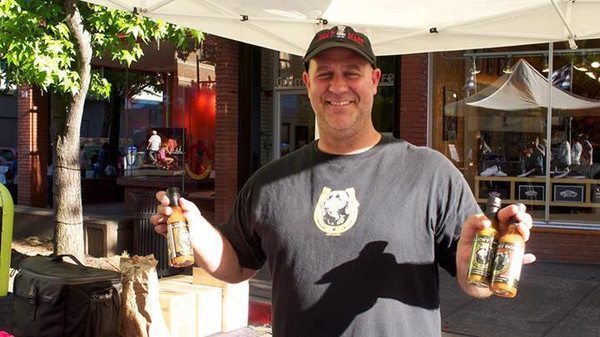
Even in our unique and quirky categories—Most Innovative, Most Glamorous, Wackiest, Yummiest, and Most Slacker Friendly—our winners simply wanted to make a difference in a market that’s underserved. Joseph Hansen built a service to optimize people’s online dating profiles. Stephvanie Wynn felt black women deserved an international pageant of their own. Marsha Hill had the cure for families suffering from lice. Art Weingaertner came up with a different cure – something to sooth people’s appetites with delectable salsas and rubs, and James Jowsey wanted to share his passion for the Jimmy Buffet toes-in-the-sand lifestyle and others seeking “the good life.”
As exciting as this annual announcement is for us at StartupNation, it’s also a dreaded time of year for us. While we’re thrilled to be able to give due recognition to the 100 winners of the annual Home-Based 100 for 2009, we’re always traumatized by the thousands of contestants whose businesses were also extraordinary and simply didn’t make it into the Top 100. To those we say, you’re in good company trying to build a home-based company. We hope that the 2009 StartupNation Home-Based 100 winners are an inspiration to help you take your businesses to the next level.